Opportunities
Our group welcomes enquiries from prospective PhD students and postdoctoral researchers, with approximately 1-2 positions available each year.
If you are interested in joining us, you are encouraged to contact the group lead or speak with current group members to learn more about our research environment and whether the group would be a good fit.
We are looking for motivated researchers who:
▪ Have strong quantitative training in geophysics, Earth sciences, physics, engineering, or a related field.
▪ Have experience in dense array seismology, waveform modelling, source characterization, numerical simulation and/or signal processing.
▪ Have strong programming skills, particularly in Python. Experience with HPC or GPUs is an advantage.
▪ Have experience or an interest in fieldwork.
▪ Can work both independently and collaboratively.
▪ Are curious, self-motivated, and enthusiastic about research at the intersection of observational seismology, emerging sensing technologies, and environmental monitoring.
Much of our work involves large and complex geophysical datasets, supported by high-performance computing. Although researchers may initially focus on a particular method or dataset, we encourage them to develop a broader understanding of both the techniques they use and the Earth science questions that motivate their work. We place particular value on looking at waveforms, understanding how the seismic wavefield is being recorded, and using that physical insight to guide our quantitative analysis and interpretation.
When developing a new project, we aim to identify a topic that:
1. The researcher is genuinely interested in.
2. Addresses an important scientific question and builds on the researcher’s strengths.
3. Fits the group’s expertise, collaborations, and available funding.
Research and Career Developments
PhD students will develop strong analytical, computational, and field skills while working with large geophysical datasets. They will be supported in presenting their research at international conferences, developing scientific confidence, and becoming increasingly independent researchers.
Postdoctoral researchers will have opportunities to lead projects and help shape new research directions within the group, particularly in emerging areas of fibre-optic sensing and environmental seismology. Mentorship will be provided in grant writing, student supervision, project development, and building an independent research profile. Postdoctoral researchers will also contribute to collaborative and interdisciplinary projects within Singapore and internationally.
How to get in touch
Prospective applicants are encouraged to contact the group lead before submitting a formal application. Please include:
▪ A CV
▪ A description of your research interests, expertise, and why you would like to join the group.
▪ Examples of scientific writing, such as a thesis, publication, or course report.
▪ Where relevant, an example of code you have written.
Formal openings will be advertised through the NTU Workday Job portal. Check out active jobs here!
About the School, PhD Programme and Postdoctoral Fellowships
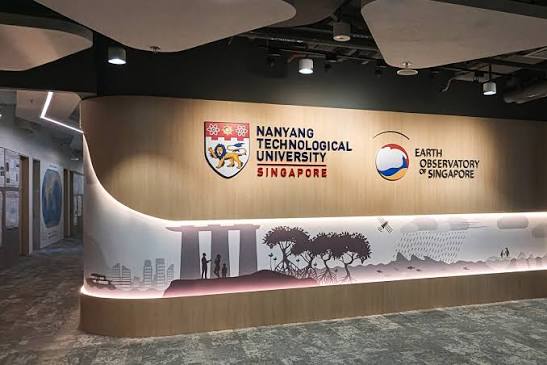
Asian School of the Environment (ASE) is a diverse, interdisciplinary school at Nanyang Technological University (NTU) that addresses key environmental challenges in Asia and globally through Earth science, engineering, ecology, and the social sciences. ASE works closely with the
Earth Observatory of Singapore, an NTU research institute focusing on geohazards and climate change in Southeast Asia for a safer, resilient, and sustainable society.
The ASE PhD programme offers a fully funded 4-year PhD in Earth and Environmental Science, with two intakes per year (August and January; application deadlines ~4 months prior). Check out the
PhD application details here.
NTU also offers several competitive
postdoctoral fellowships, and the group can support suitable candidates in their applications.
We welcome applications from candidates of all backgrounds and geographic regions.